

1. Introduction:
A quick review: HYPOTHESIS: Self-consciousness Model v1.0
Basic Principles:
Consciousness is formed through human experience and memory, and through continuous accumulation or enhancement, it becomes the conscious subject capable of independent judgement. This basic assumption can be used to demonstrate the uniqueness of humankind, based on the diverse experiences arising from all interactions with the external world and the resulting feedback. It can also serve to corroborate the connection between the process of human consciousness formation and changes in patterns of thought.
Through practical verification of the consciousness model, I have gradually come to realise that, even after objective phenomena have given rise to subjective consciousness, humans, as conscious agents, still face a limitation in their exploration of the objective world. Through the continuous accumulation and iteration of the consciousness pathway, one’s own cognitive boundaries are formed; these boundaries generate cognitive possibilities within their limits through the combination of knowledge or stimuli across different domains. Consequently, as the length of the consciousness pathway formed by experience increases, it provides greater possibilities for one’s own cognitive boundaries. Here, I tentatively combine these factors with the model of subjective consciousness to construct a hypothetical theoretical framework.
2. Frameworks of Hypothesis:
(1): Models of Human Consciousness and Fundamental Principles of Objective Inquiry
Building upon a review of the theory of consciousness models from the previous version, as time progresses, individuals continuously accumulate and extend their memories, and the length of the consciousness channel increases in direct proportion to time.
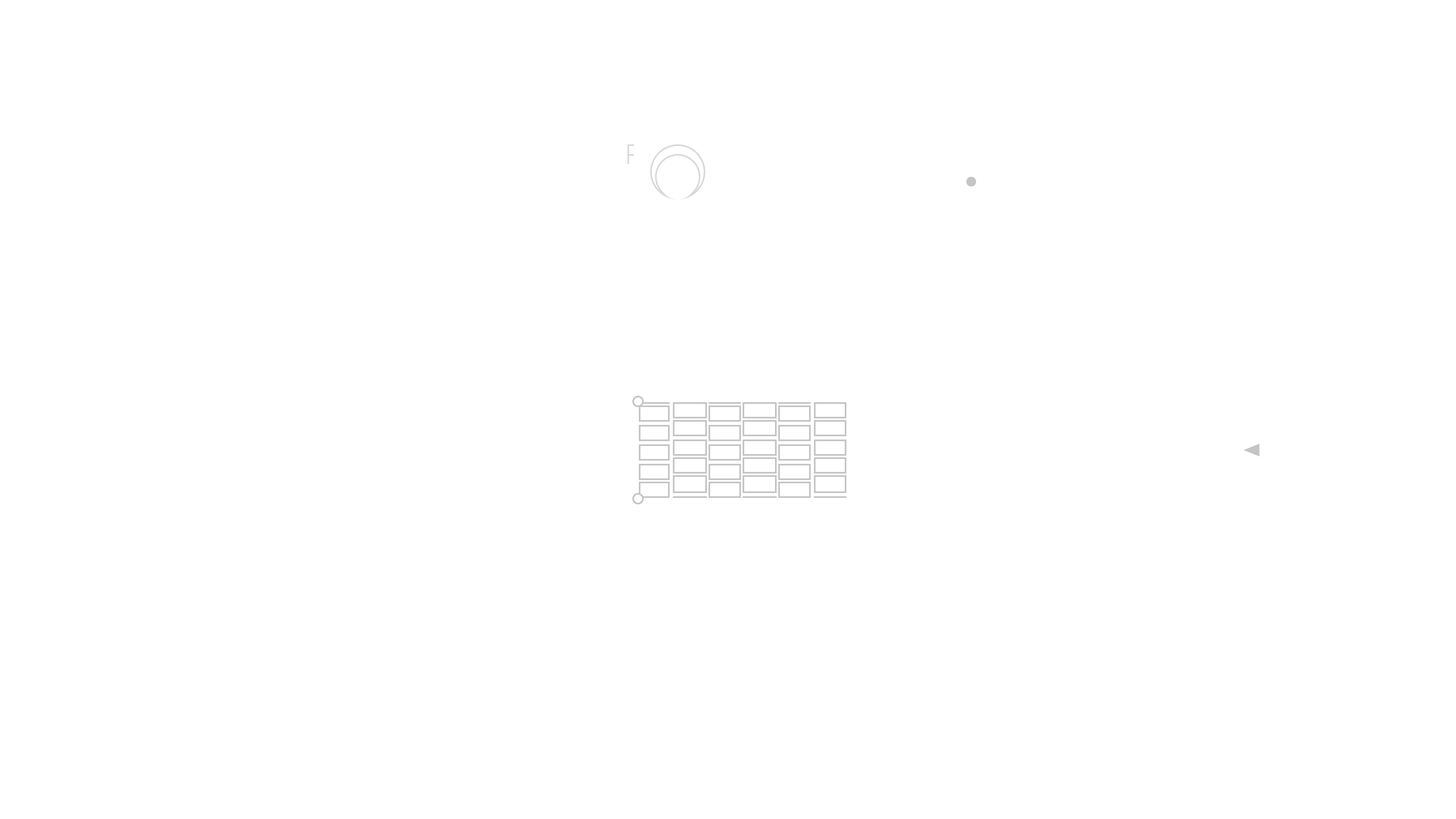 (Original consciousness process model v2.0–01)
At this point, I would like to add a few remarks regarding the absolute differences between individuals in terms of their consciousness channels:
Assuming that sensory impairments create cognitive barriers, differing degrees of sensory perception — or sensory deficits — can lead to distinct patterns of consciousness and cognition in individuals. Furthermore, an individual’s upbringing and life experiences shape their cognitive development to varying degrees. Viewed from another perspective, theoretically speaking, if two people had shared exactly the same experiences and sensations from birth to the present day, they might possess identical consciousness and personalities, and could even become identical individuals. However, given the inherent uncertainty of nature and human society, such a theoretical scenario is virtually impossible to occur — even if one person, compared to the other, had a single additional conversation with a stranger, heard a single extra expression of gratitude, or felt a slight chill from a gust of wind, or viewed things from a slightly different perspective. All these seemingly insignificant actions are the elements that create differences between people; these subtle elements shape a person’s distinct thoughts and reactions, ultimately forming an independent consciousness. Therefore, from a theoretical perspective, there are no human individuals who are completely identical, unless two people were perfectly superimposed across dimensions such as space and time before the formation of their consciousness, sharing entirely consistent experiences and judgements — and that person could only be yourself.
Accessible boundaries (invisible barriers): The limitation of human cognition
The extent of this boundary depends, to a certain degree, on the physical limits of human consciousness, combining the fundamental principles of basic logic and objective materialism. From the perspective of a particular population, their way of life and conditions of existence are both manifestations of that population’s collective cognition. Alternatively, it may stem from the physical and technological limitations faced by humanity as a whole in its exploration of the cosmos, thereby creating barriers to our understanding of specific aspects of the macrocosm. From an individual perspective, the limits of what humans can perceive through their senses and retain in memory are defined by various criteria and dimensions that constitute the scope of this boundary; for example, sensory deficiencies, cognitive limitations imposed by objective physical constraints, or shared technological bottlenecks faced by humanity. These objective elements collectively determine the extent of the accessible boundary. Therefore, from the perspective of humanity’s objective existence, we cannot currently ignore the limitations imposed by different dimensions on what is accessible — much like the physical limits of the human body in terms of the pressure it can withstand or its capacity for spatial movement. Humanity is unable to explore the unknown universe, measured in light-years, within a finite period of time. All these examples confirm the existence of cognitive boundaries faced by both individual humans and the human species as a whole.
Self judgment points:
As the point where the channel of consciousness and the boundaries of reach converge, it represents the extreme limit of the subjective decisions that each individual consciousness is capable of making; it determines every human being’s capacity for self-assessment and critical thinking, as well as the scope of their imagination.
(2): The model of self-consciousness explores the objective world
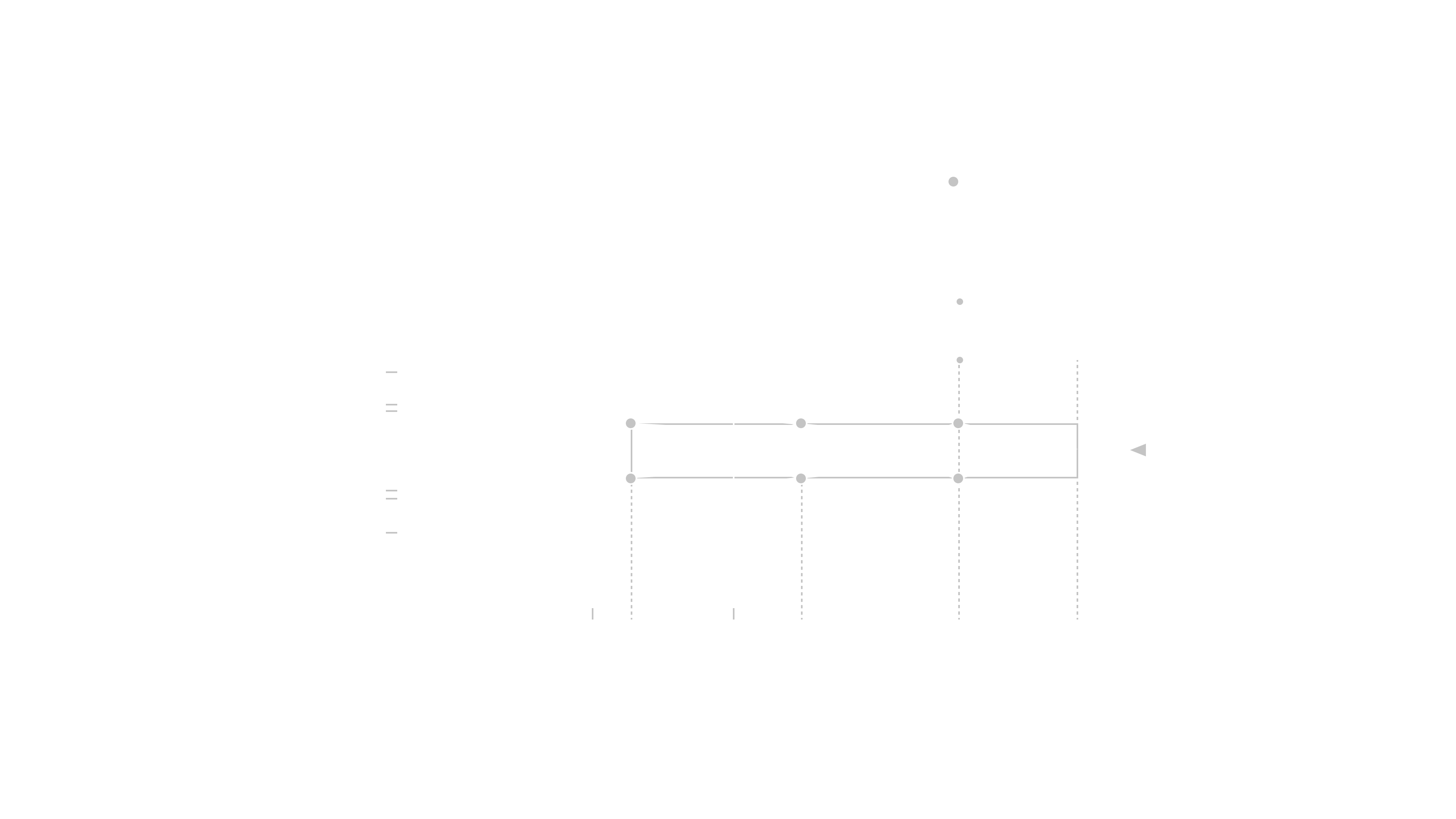 (Original consciousness process model v2.0–02)
Based on the benchmarks and principles set out in Part One, this structural prototype representing individual consciousness in its exploration of the objective world has been established. A coordinate system has been established with the time dimension (x) and the degree of the unknown (y) as the axes; simultaneously, there are two positively correlated values on the time axis: the length of the consciousness channel and the length of cognitive knowledge. As mentioned earlier, the length of an individual’s channel of self-awareness depends on their external experiences, which form fragments of memory and extend the length of the channel, whilst its width is likewise determined by the value of the objectively accessible boundary. Consequently, the length of an individual’s cognitive knowledge depends on the length of their channel of self-awareness and gives rise to imagination and creativity through the decomposition and recombination of various known fragments. Therefore, the length of cognitive knowledge is often greater than that of the channel of self-awareness, whilst the two remain in a directly proportional relationship. The diagram illustrates three different lengths of the self-awareness channel (with the same accessible boundary) within the objective exploration model proposed by this theory.
(3): The verification of the exploration model by the extreme values
[Self-awareness model channel length: 0]
A simulation of extreme values based on the length of the consciousness channel. It is hypothesised that when the length of the consciousness channel is zero, as there is no independent entity of self-awareness, there is no knowledge or cognition whatsoever, and the scope of the unknown is infinite. Consequently, before an individual possesses independent consciousness, they lack any capacity for self-judgement or even the ability to think; however, this initial value is also a matter of debate from a human perspective. From the moment a human being possesses independence or is capable of generating consciousness, this self-awareness channel ceases to be zero. It may have begun whilst a person was still merely a cell or during the process of cell division, because from the moment the capacity to generate consciousness is acquired, stimuli or sensations from any dimension become part of the experiences and memory fragments within the consciousness channel. Perhaps at the very moment of birth, an infant already possesses independent consciousness and makes instinctive survival responses based on their existing memories.
 (Original consciousness process model v2.0–03)
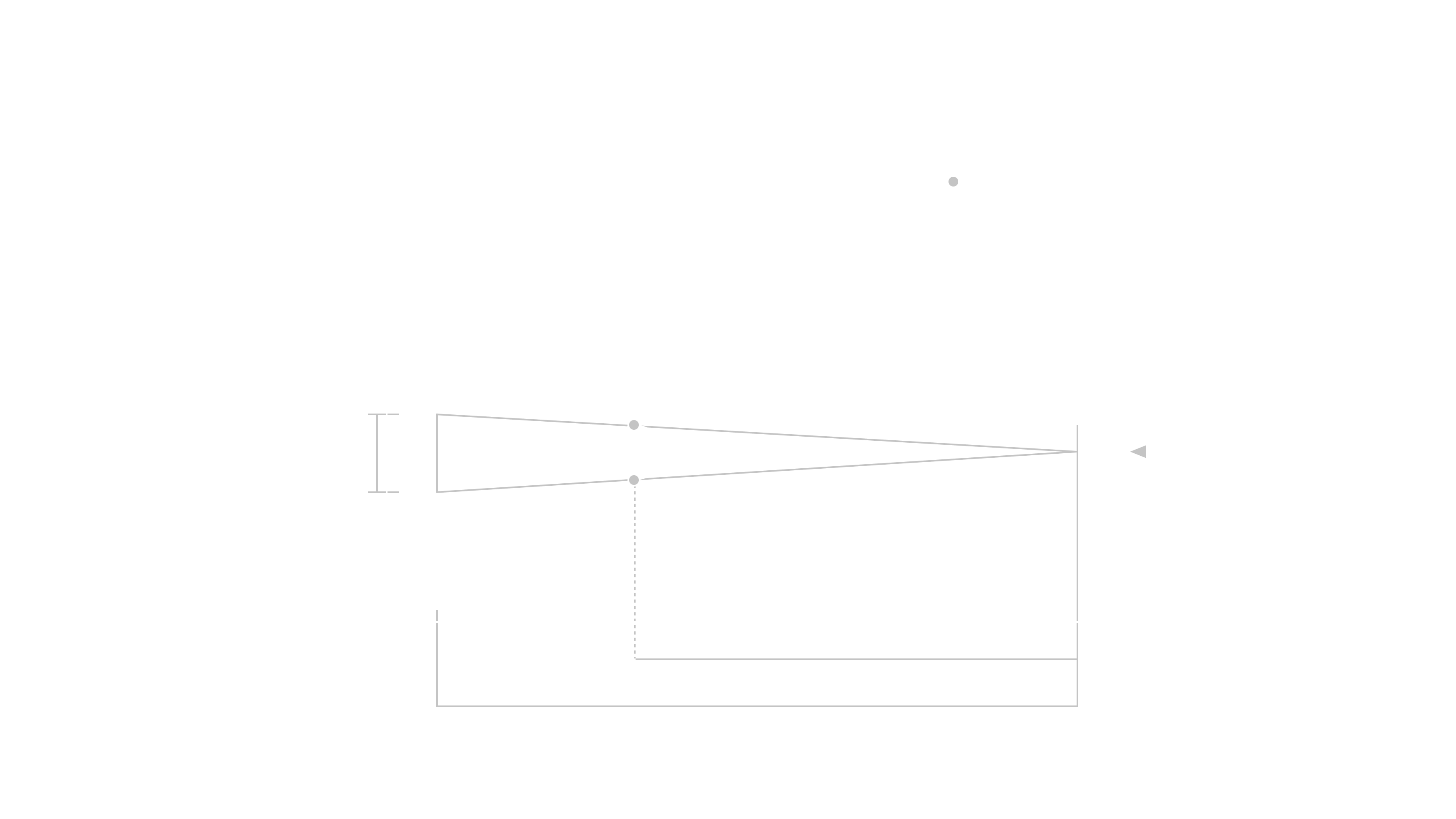
[Self-awareness model channel length: a certain value]
Building upon the diverse sensory receptors inherent to human beings and the greater range of experiential possibilities afforded by the temporal dimension, the individual’s channel of consciousness undergoes continuous iteration and expansion. Based on the model of human consciousness and the principle of objective exploration, we hypothesise that once an individual possesses a channel of consciousness of a certain length, experience and exploration will lead to a narrowing of the scope of objective uncertainty during this process. The length of cognitive knowledge also accumulates over time, meaning that, in theory, human individuals are capable of creating more diverse combinations of the memories within their channels of self-awareness and exploring a wider range of possibilities. However, an interesting phenomenon arises: once an individual’s channel of self-awareness has reached a certain length, the accumulation of this length and the reduction in the scope of the unknown are constrained by the limits of what is accessible. This implies that once humans have acquired a certain level of experience, they are confronted with the constraints of these accessible boundaries, making it progressively difficult for entirely new phenomena and memory fragments to emerge. Furthermore, the objective limitations imposed by the human lifespan — which restrict the temporal dimension — also hinder the potential growth of the self-awareness channel. When combined with the objective cognitive limits that cannot be ignored, the analogical combination of different individuals’ consciousness channels can, in a general sense, define the scope of the unknown in human exploration of the objective world.
 (Original consciousness process model v2.0–04)
(4): Invisible barriers: Human cognitive boundaries and the unknown area
Based on the principles of the consciousness channel and the theory of human objective exploration, all human responses, judgements, thoughts, imagination and the like — which are grounded in subjective consciousness — depend on the content of one’s own consciousness channel and are generated through nodes of self-judgement. Just as illustrated in the diagram, once an individual possesses a certain degree of self-awareness, they are capable of generating subjective conscious feedback (red line). Furthermore, based on the theoretical framework, we can define subjective conscious feedback that extends beyond the scope of cognitive knowledge as imagination and creativity; this feedback arises slightly beyond the individual’s ordinary scope of self-knowledge, generated through the disassembly and reconfiguration of various fragments and elements within the self-awareness channel. which also explains the value and limitations of an individual’s creativity and imagination. Subjective conscious feedback that falls short of the individual’s cognitive scope can be defined as the individual’s reactions and judgements, such as normal communication and survival behaviours.
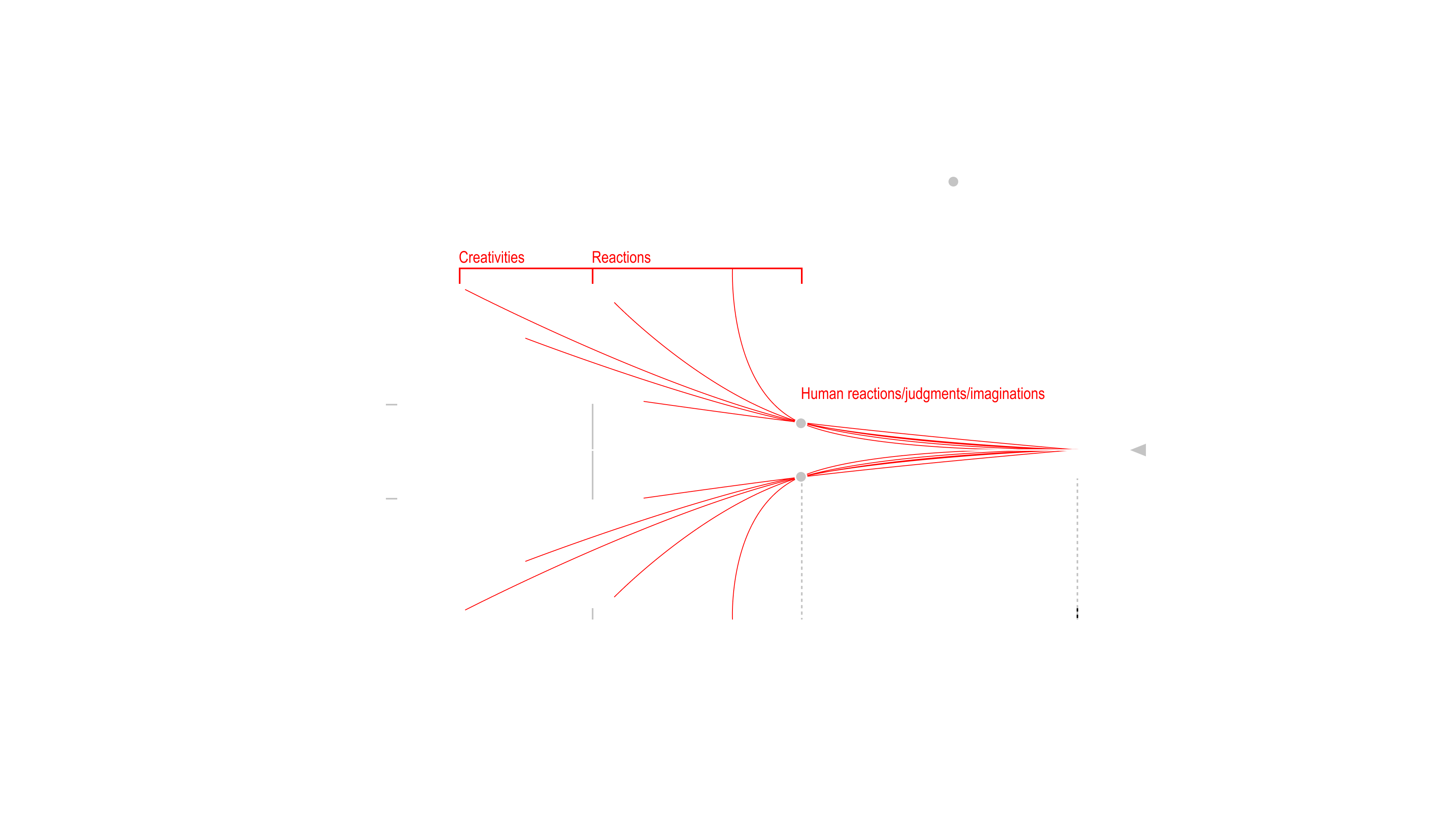 (Original consciousness process model v2.0–05)
Furthermore, it is not difficult to observe that, whether among different individuals or within human collective populations subject to this theory, there exists an inaccessible realm within subjective consciousness feedback. As this realm does not exist within the consciousness of any single individual nor can it be generated through creativity, humans are unable to experience its existence or perceive its contents. Yet, as a species possessing the capacity to continually explore the unknown, humankind is constantly drawing nearer to the boundaries of this realm and seeking to lift the veil upon it; this exploration of the unknown has likewise become the present-day purpose and pursuit of the human species as a whole.
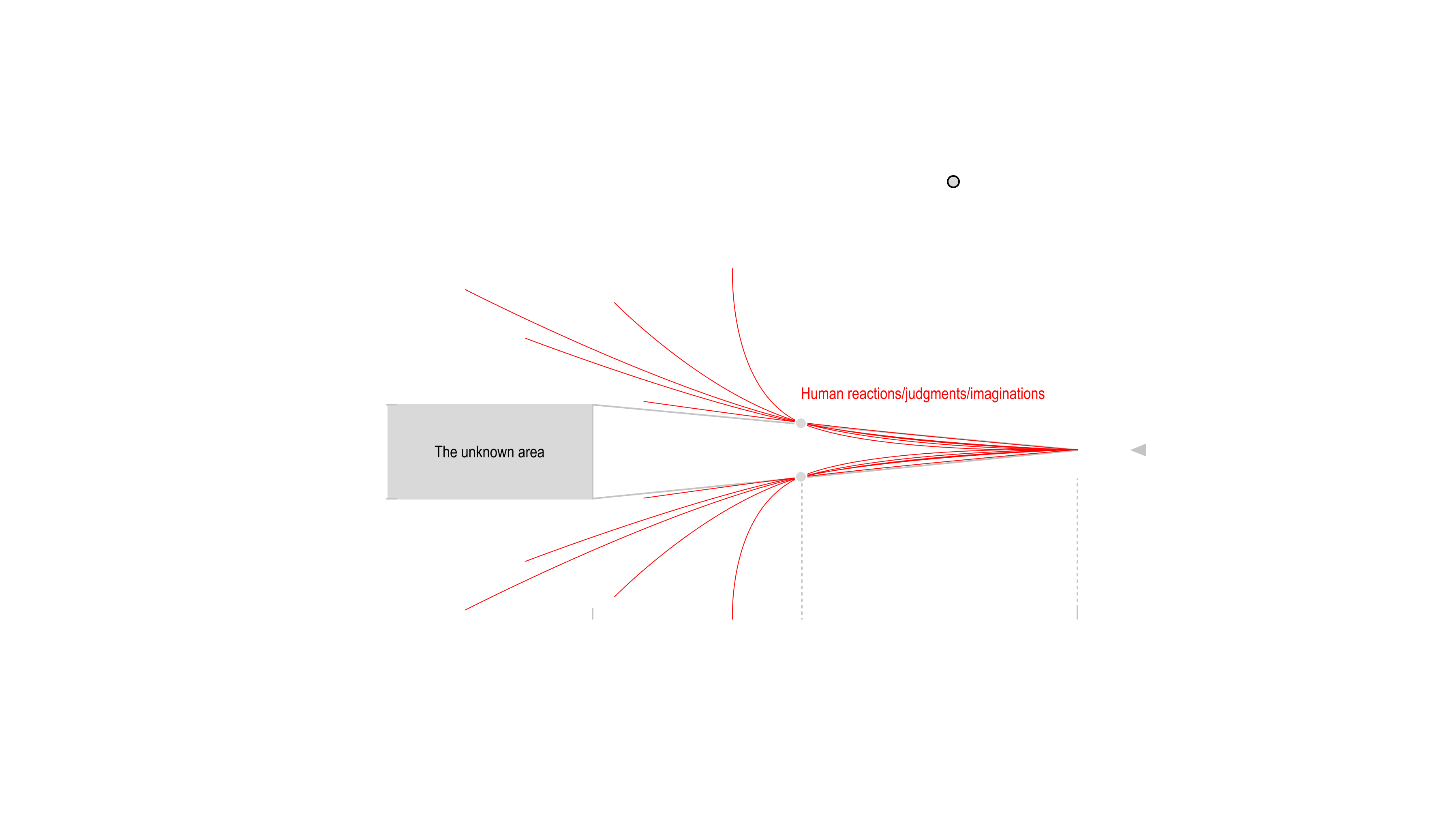 (Original consciousness process model v2.0–06)
3. Conclusion:
Perhaps, in a future shaped by certain circumstances, an extreme post-humanist society might break through the barriers imposed by human consciousness in the temporal dimension and achieve a significant breakthrough in the limits of human cognition — which are influenced by factors such as technology and the senses — thereby enabling humanity to take its exploration of the unknown a step further.
But perhaps the very existence of the unknown is what gives it meaning; it endows humanity with the desire and motivation to explore, and creates for the individual, in the process of seeking one’s place in the world — the meaning of life.
When cognitive boundaries disappear,
even though I cannot imagine it,
and human society no longer contains the unknown,
then all objective existence can be measured and quantified,
and all subjective consciousness can likewise be measured and quantified.
If life is reduced to nothing but the known and repetition,
would humanity still be human?
*The ownership of the project and the information belongs to the individual only for communication and sharing. Do not copy or use it for commercial purposes.