

1. Background And Initial Thought:
We seem to have gone a long time without seriously asking a rather basic question: Why is our primary way of engaging with the digital world still a rectangular piece of glass held in our hands?
Over the past two decades, the smartphone has achieved an extraordinary degree of technological convergence. Cameras, maps, wallets, music players, televisions, newspapers, game consoles, social networks, communication tools and, increasingly, productivity functions have all been compressed into a single device that fits in a pocket. It has been so successful that it is now difficult to imagine everyday life without one. Work, payments, communication, navigation, memory, entertainment, social interaction, information retrieval. Most digital activities eventually collapse into one remarkably familiar action: Look down, and take out the phone.
Yet it is precisely this overwhelming success that reveals a certain contradiction. As the digital world continues to expand, our principal window into it remains a screen of roughly six inches. And as more and more human activity is compressed into this single portal, we appear to be adapting ourselves to the interaction model itself — perhaps even accommodating it.
2. Case Analysis And Reflection:
When the tool begins to shape us
This sensation was first magnified when I put down my phone one day and felt discomfort in my little finger, which was being used as a stand. When a tool is used by enough people, for long enough, it eventually affects more than efficiency, it begins to shape behaviour. Today’s information environment provides a particularly visible example. We have easier access to information than at almost any point in history. News, knowledge, opinion, video and entertainment are available in near-infinite supply. Yet at the same time, we seem increasingly accustomed to deciding almost instantly whether a piece of information is ‘worth continuing with’.
A few seconds without a hook: swipe.
A point requiring more context: skip.
A piece of content that fails to stimulate quickly enough: next.
Short-form video and infinite feeds have reduced the cost of switching information to almost zero.
The result is a distinctive feedback loop:
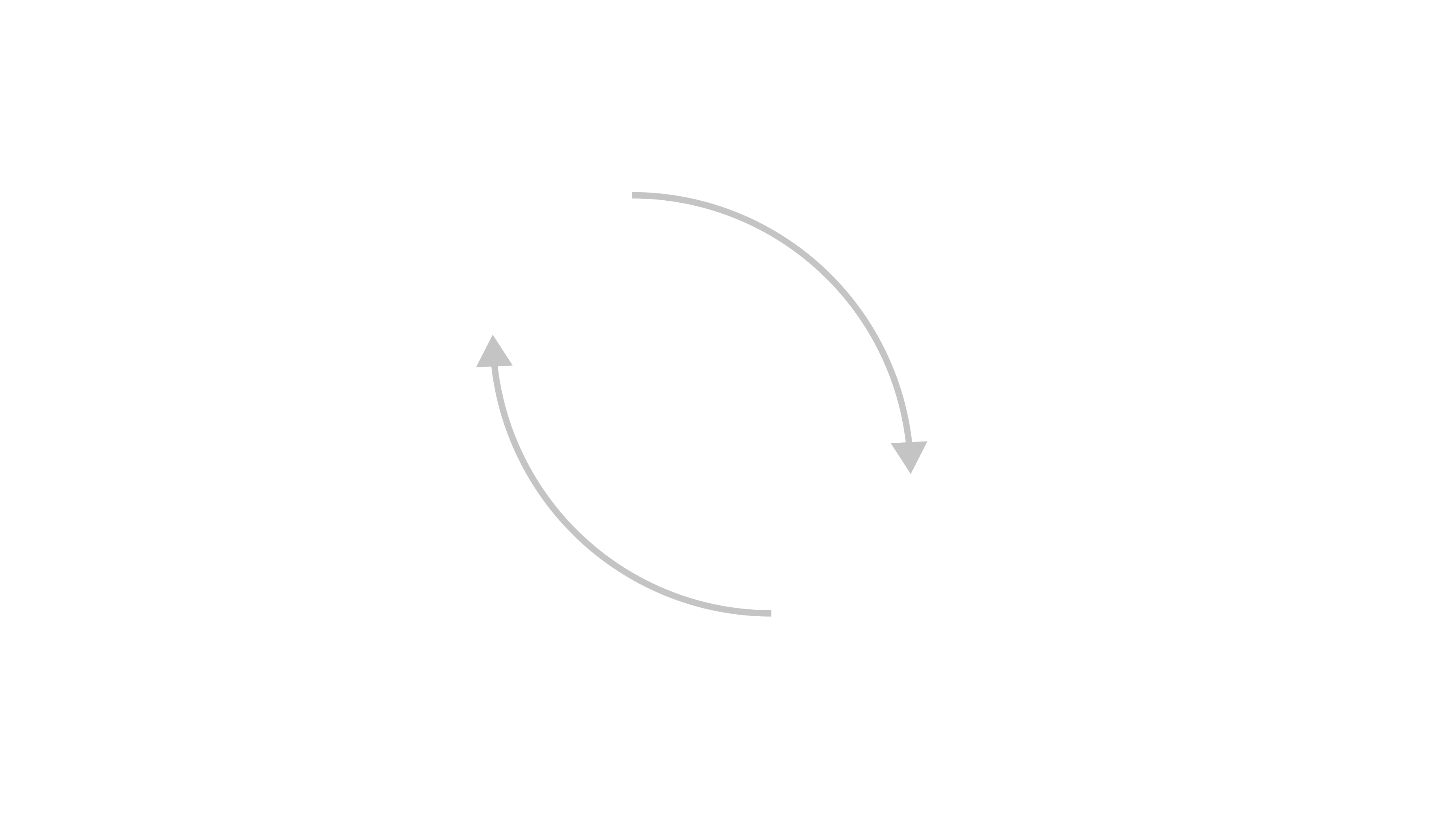 (Original illustration 01: Stimulating Circulation)
Perhaps we have not simply ‘lost our attention’. A more precise interpretation may be that today’s information systems continuously reward faster and more frequent switching of attention. We are becoming more efficient at accessing information, but are we also becoming accustomed to giving each piece of information only a brief opportunity to prove its value? That seems worth questioning. At the same time, information itself has entered a different condition. The old problem was: How do we find information? The emerging problem is closer to: How do we identify what deserves attention within an endless supply of information? Information scarcity is increasingly becoming: Attention scarcity. When attention becomes scarce, competition for it intensifies. More creators, more content, faster pacing, stronger visual stimulation, greater emotional intensity. When everyone increases the level of stimulation, stimulation itself begins to lose value. I prefer to think of this as a form of:
(1): Attention Inflation
Each unit of content requires increasingly intense stimulation to purchase the same amount of attention. Headlines become more extreme, thumbnails more exaggerated, pacing faster and conflict more amplified. This may not simply be a question of ‘declining content quality’. It may instead be an emergent consequence of the incentives built into the system. If platforms increasingly measure success through engagement, retention and session time, then helping a person achieve something and keeping that person on the platform are not necessarily the same objective. What does a successful interaction actually mean? A deceptively simple question therefore becomes increasingly important: What does a successful interaction actually mean? More clicks? More time spent? Or completing what truly matters at a lower cost to human attention?
(2): Hidden Entropy Increase Behind Information Integration
Another, less visible form of entropy is emerging within the interface itself.The smartphone originally solved the problem of bringing many tools into one device. But today, within this supposedly unified device, we are increasingly required to manage fragmented digital systems. Different apps, accounts, notifications, services, files, subscriptions. We have become accustomed to asking ourselves: Which app? Which account? Which tab? Where did I save it? Which notification? Yet these are rarely our actual intentions. They are mostly forms of: System Management.
But, human intention, by contrast, is usually continuous. For example: Have dinner with a friend at seven tonight. Yet the digital system may require repeated movement between Messages, Maps, Restaurants, Calendar, transport and payment. From the human perspective, this is one continuous intention. From the machine’s perspective, it becomes several separate interfaces. This increasingly suggests to me that: Human life is continuous, whilst digital services are fragmented.
Perhaps the deeper contradiction behind many interaction problems is not whether a particular app is sufficiently usable. It may be that: Digital systems are still largely organised around systems, not humans. Digital systems are organised around devices, applications, interfaces and content. Human life unfolds around bodies, attention, environments, relationships, situations and intentions. These are not quite the same coordinate systems. Some might say that this is precisely why we need a user-centric mindset — or why we need to consider the user experience. But that leads to another question: What if interaction started from the human, rather than the device?
3. Ideation And Concepts Generation:
3.1. Concept One: Humans Back to the Coordinate System
One of my ideas is: the starting point for future interaction should perhaps shift from ‘what a device can do’ back to ‘what a person needs at that moment’. When people interact with one another, their environment or the digital world, the variables that truly influence the nature of that interaction are not limited to the device itself. They also include a person’s state of mind, attention, environment, current task, and the significance of the information itself.
The logic of interaction may therefore begin to move
from:
Device → Interface → User
towards:
Human State + Context + Information → Right Touchpoint
For someone who is walking, vision primarily belongs to the surrounding environment. Navigation may not need to occupy a full screen continuously; a subtle visual cue, a sound or a haptic signal may be enough. The same information, when someone is seated and working, may be better presented on a screen in full detail. The question, then, is not: ‘Screen or no screen’. But rather: ‘What is the right medium for this person, at this moment’. That is what I mean by: Human as the Coordinate System. The aim is not to make people continually search for the correct device, but to allow information to find the most appropriate way of reaching them. And in some moments, the most appropriate interaction may be: Nothing happens. As technology becomes more capable of understanding context, perhaps one of its most important abilities will not simply be knowing when to appear. It may also be knowing when not to interrupt.
This is why I am increasingly inclined to believe that: What truly needs to change in the next generation of interaction is not necessarily the form of the device itself, but rather the logic by which information interacts with people.
Looking at the development of the industry, certain changes are already beginning to hint at this direction. The mobile phone industry will continue to compete in established areas such as chips, cameras, screens and battery life, but at the same time, some more exploratory innovations have already begun to move beyond the assumption that ‘the mobile phone is the sole core medium’. Apple Vision Pro is a representative example; for me, the significance lies not in whether ‘head-mounted displays will replace mobile phones’, but in the fact that, for the first time within its personal computing ecosystem, Apple has so explicitly attempted to liberate digital content from physical screens, allowing the eyes, hands and voice to collectively serve as the primary input methods. If we interpret this as the first stage of spatial interaction, then what it primarily addresses is still the question of how to move the interaction itself away from the physical screen and into real space.
However, the Vision Pro also raises another question worthy of further exploration. Even though the interface has entered three-dimensional space, a great deal of the interaction logic and rules still stem from the traditional GUI. Apple’s own visionOS explicitly continues the software application ecosystem familiar to users, merely repositioning them within the spatial environment. Therefore, the truly interesting next step may not be how to create more interactive interfaces within space, but rather how to ensure these interfaces place less of a burden on the user. This may imply touchpoints that are lighter, more readily accepted, and closer to everyday behaviour itself. It need not necessarily be a computing device that covers the entire field of view; it could simply be a pair of glasses, headphones, a watch, a car, or even an extremely lightweight intervention of information within the spatial environment. Apple’s own product ecosystem has, in fact, already begun to exhibit this decentralised trend: for example, Live Activities can appear in different locations on the iPhone, Apple Watch, Mac and CarPlay depending on the device; whilst AirPods’ real-time translation shifts the processing of certain information — which would otherwise require staring at a screen — directly to the auditory channel. More notably, this is not an exploration unique to Apple. Google’s Android XR smart glasses, announced in 2026, explicitly state their aim as providing assistance without ‘disconnecting users from the present moment’, and clearly distinguish between ‘Audio Glasses’, which provide only auditory information, and ‘Display Glasses’, which display information only when needed.
Such explorations lead me to interpret the so-called ‘spatial interaction’ as something else entirely: it does not necessarily imply ‘greater spatialisation’. Rather, it may signify a reduced sense of the device, lower cognitive load, and interactions that are more closely aligned with real-life scenarios.
Perhaps the deeper contradiction underlying many of today’s interaction issues does not concern whether a particular piece of software is user-friendly enough. Rather, it resides in the fact that: Digital systems remain, to a large extent, system-centred rather than human-centred.
Digital systems are organised around devices, applications, interfaces and content, but the human world revolves around the body, attention, environment, relationships, context and intent; these are two coordinate systems that do not entirely align. Some might say that this is precisely why we need a user-centred mindset, or why we must consider user experience. But I have begun to wonder: what if interaction were initiated by people, rather than by devices?
3.2. Concept Two: Interaction Beyond Touchpoints
Does interaction necessarily require a physical touchpoint? We tend to think of interaction as a form of ‘contact’ — tapping a screen, pressing a button, speaking a phrase, gazing at an object, making a gesture, or even putting on a pair of glasses. Yet these actions still seem to be part of an ongoing search for the next, more natural touchpoint. Perhaps what we really ought to reconsider is this: why must interaction take place at a specific location?
In the real world, such clear-cut boundaries do not exist. We perceive space through sight, direction through sound, distance and temperature through our bodies, and emotions through facial expressions; we also constantly make sense of everything that is happening through memory, attention and consciousness. Often, we do not even need to take any active action. A familiar person approaches, a voice drifts in from afar, the light changes, or the environment becomes noisier. We naturally adjust our behaviour. There are no buttons, no software, no interactive interfaces, and not even a ‘interaction’ in the strict sense of the word; yet interaction is constantly taking place. The next generation of interaction may not necessarily involve finding a better ‘touchpoint’, but rather gradually rendering the ‘touchpoint’ itself irrelevant.
If information can flow across multiple media, then perhaps it need not ultimately be tied to any single medium. If a system can understand a person’s context, then perhaps it need not wait for an explicit action. If AI can understand a person’s intent, then interaction might even occur before the person actively expresses it.
We can therefore envisage a completely different interactive journey:
Sensation → Intend → Interaction
In certain circumstances:
Sensation → Interaction
When a system sufficiently understands a person’s state, it may no longer need to demonstrate that it is functioning through an obvious action. Information simply blends into a person’s actions and environment in an almost imperceptible manner. At this point, interaction begins to shift from ‘I actively operate something’ to ‘a continuous relationship unfolding between myself and the world’. This has also led me to rethink the flow of information across media; cross-media interaction is not merely the synchronisation of data between mobile phones, headphones and smartwatches. If it were merely a matter of synchronising information between devices, it would still be an extension of traditional digital systems.
What is more worth imagining, then, is that information begins to transcend not just devices, but the boundaries of the medium itself. It may exist in sound, in light, in space, or in the body’s tactile feedback. In the future, it may even exist between neural signals and consciousness. Consequently, a ‘medium’ may no longer be a tangible object. It could be a state, a perception, a relationship, or simply a fleeting shift in consciousness.
If we were to liken today’s interactions to a series of discrete nodes:
Touchpoint → Action → Response
Then the future might more closely resemble a continuous field:
Human ↔ Environment ↔ Information
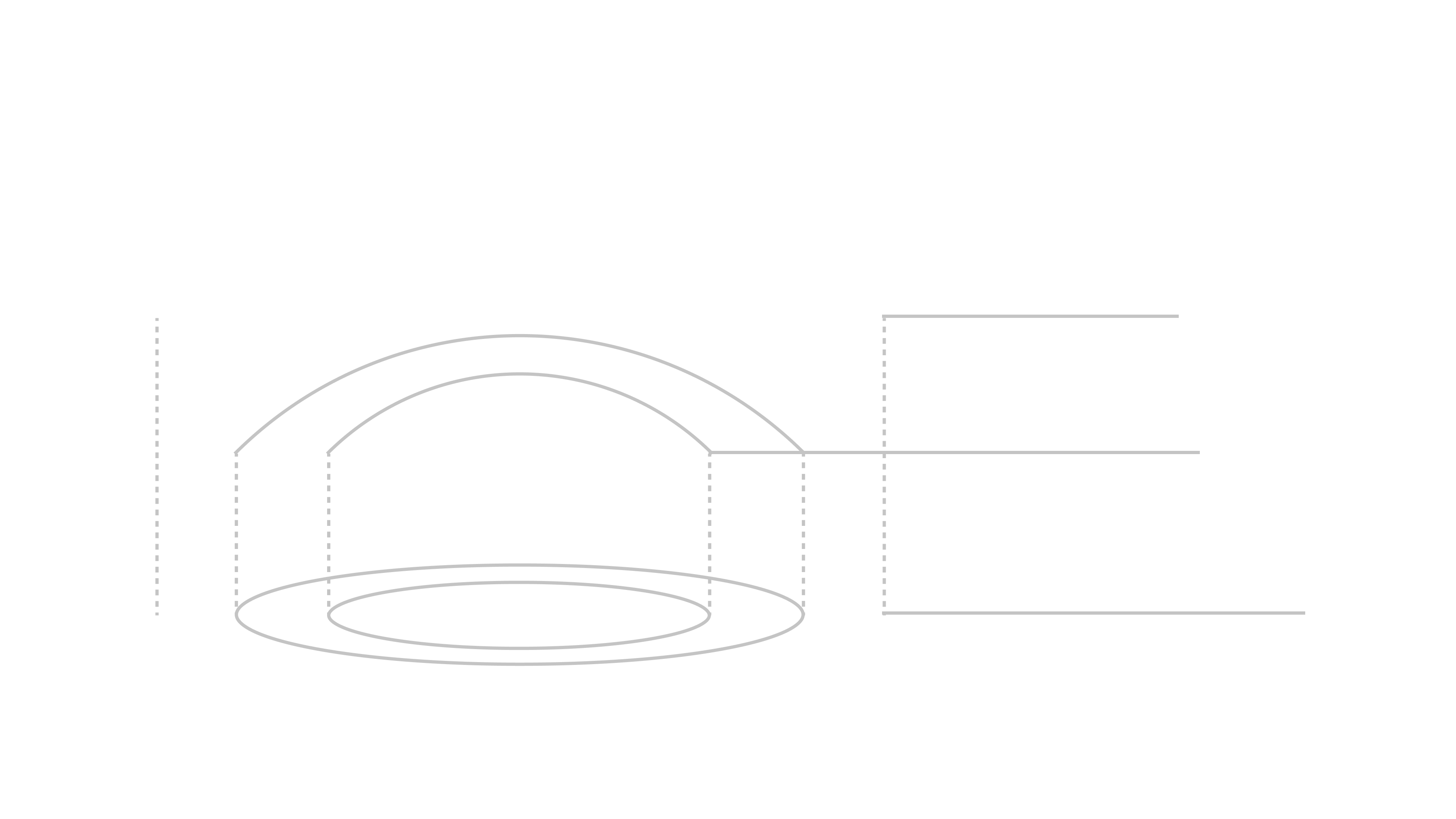 (Original illustration 02: Humans to the Coordinate System)
In this sphere, people no longer constantly enter individual digital systems, nor does digital information wait for people to actively access it; the boundary between the two is beginning to blur. This space may well become a living environment centred on the individual — be it a home, a community, or even society as a whole. People no longer need to perform specific actions to trigger information retrieval or the act of interaction itself; natural human gestures, attention, emotions and sensations — these sensory inputs — are equally the starting points for triggering interaction. Interaction has evolved from an ‘action’ into a ‘state’; from an ‘event’ into a ‘continuum’; and from an ‘interface’ into a ‘relationship’.
This, perhaps, is where I believe the true value of exploring the next generation of interaction resides. Perhaps one day, we will no longer ‘open’ a digital world, because the digital world will already exist within our surroundings. Nor will we ‘use’ a particular device, because devices will have gradually receded into the ‘background’. We will not even need to be aware that we are interacting with technology, because: Technology becomes less of an object, and more of a condition of the environment.
*The ownership of the project and the information belongs to the individual only for communication and sharing. Do not copy or use it for commercial purposes.